 English
 русский
 Español
 عربى

Content
- 1 Why PVC Is a Smart Choice for a Pool Deck
- 2 Main Types of PVC Poolside Flooring
- 3 Safety Features to Check Before You Buy
- 4 How to Choose Color, Thickness and Texture
- 5 Step-by-Step Installation Around the Pool
- 6 Cleaning and Long-Term Care
- 7 Common Mistakes to Avoid
- 8 Is PVC Outdoor Flooring Right for Your Pool?
If you have ever stepped out of a pool onto a hot, slick concrete deck, you already know why people look for better surfaces. PVC outdoor flooring for poolside use has become a popular fix because it is softer underfoot, drains water, resists chlorine and is easy to install without a contractor. This guide covers how it works, which type to buy, what safety features to check, and how to install and care for it.
Why PVC Is a Smart Choice for a Pool Deck
Poolside flooring faces a harsh mix of conditions: constant water, chlorine or salt, strong sunlight, bare feet and heavy foot traffic. PVC (polyvinyl chloride) handles this combination better than many materials. It does not absorb water, so it will not swell, rot or grow mold inside the material the way wood can. Quality PVC pool deck flooring is also made with UV stabilizers and plasticizers that keep it flexible and slow down fading.
Comfort is another big reason. Compared with bare concrete, stone or ceramic tile, PVC poolside flooring has a slight cushion, which is gentler on feet, knees and children's elbows. It also stays a little warmer in the morning and, in lighter colors, noticeably cooler than dark stone in the afternoon sun.
Here are the main benefits in practical terms:
- Water-resistant material that dries quickly when it has a drainage structure
- Textured surfaces that improve grip for wet bare feet
- Resistance to chlorine, salt water and most pool chemicals
- DIY-friendly installation, often with no glue and no special tools
- Individual tiles that can be replaced if one is damaged or stained
Main Types of PVC Poolside Flooring
Not all outdoor PVC flooring for pools is the same product. The format you choose affects drainage, price, installation time and how the floor feels. These are the three most common options.
Interlocking PVC Pool Deck Tiles
These are square tiles, usually around 30 x 30 cm (12 x 12 in), that snap together through built-in clips or loops. Most have a grid or perforated surface with open space underneath, so water flows through and off the tile. Because they are loose-laid, you can put them directly over concrete, pavers or compacted ground. They suit people who want a quick upgrade, and they can be lifted and moved if you redesign the area.
PVC Vinyl Roll or Sheet Flooring
Roll flooring is a continuous sheet of vinyl, often with a textured or ribbed top and a fabric or foam backing. It gives you very few seams, which looks neat and reduces places where dirt collects. The trade-off is that it drains less well than grid tiles, so it works best on a deck that already slopes slightly away from the pool. It is common in commercial pool areas, water parks and changing rooms.
PVC Drainage Mats and Pool Surround Mats
Heavy-duty mats with open holes or a mesh pattern are often used around ladders, outdoor showers and entrances to the pool. They are designed to push water away from the walking area, and they are easy to hose off. Many owners use them as a spot solution rather than covering the whole deck.
The table below compares the three formats side by side.
| Type | Drainage | Installation | Best For |
| Interlocking tiles | Excellent | Snap together, no glue | Home pool decks, DIY projects |
| Vinyl rolls | Moderate (needs slope) | Cut to size, often glued or taped | Large areas, commercial spaces |
| Drainage mats | Excellent | Lay flat or link together | Ladders, showers, entrances |
Safety Features to Check Before You Buy
Safety should come before color or price. A pool deck is one of the most slip-prone places in a home, so look closely at the details that affect traction and injury risk.
Slip Resistance
Ask the seller for slip-resistance test data rather than relying on a description like "anti-slip." Wet-barefoot ramp tests such as DIN 51097 (rated A, B or C, with C the grippiest) are especially relevant to poolside areas. Pendulum test values are another common measure. If a supplier cannot show any test results, treat that as a warning sign. Also check the surface texture yourself: a fine raised pattern or small grid edges usually grip better than a smooth glossy face.
Drainage and Airflow
Standing water leads to slippery algae, odors and stains. Tiles with an open grid or raised underside let water escape and air circulate, which helps the floor dry faster after use. If you choose a sheet or roll, make sure the base underneath already drains properly.
Edges, Ramps and Material Quality
Many interlocking sets include sloped edge pieces and corner pieces. These reduce tripping hazards at the border of the deck. It is also worth checking that the PVC is described as UV-stabilized, and ask whether it is free of heavy-metal stabilizers and meets the safety standards required in your region, especially if children will be using the area.
How to Choose Color, Thickness and Texture
Once safety basics are covered, these three choices decide how the floor looks and how long it lasts.
- Color: Light gray, sand, white and light blue reflect more sunlight and stay more comfortable on bare feet. Black, dark brown and dark gray absorb heat and can get uncomfortably hot in direct sun.
- Thickness: Interlocking tiles are commonly in the 5 to 8 mm range, and thicker tiles tend to feel more cushioned and handle heavy loungers better. Vinyl sheet is usually thinner, so a good backing matters more.
- Texture: A light pebble, ribbed or grid pattern gives grip without being rough on feet. Very aggressive textures can be harder to clean and uncomfortable for kids.
- Load rating: If you plan to place heavy planters, a hot tub or a bar cart on the surface, ask for the maximum load per tile.
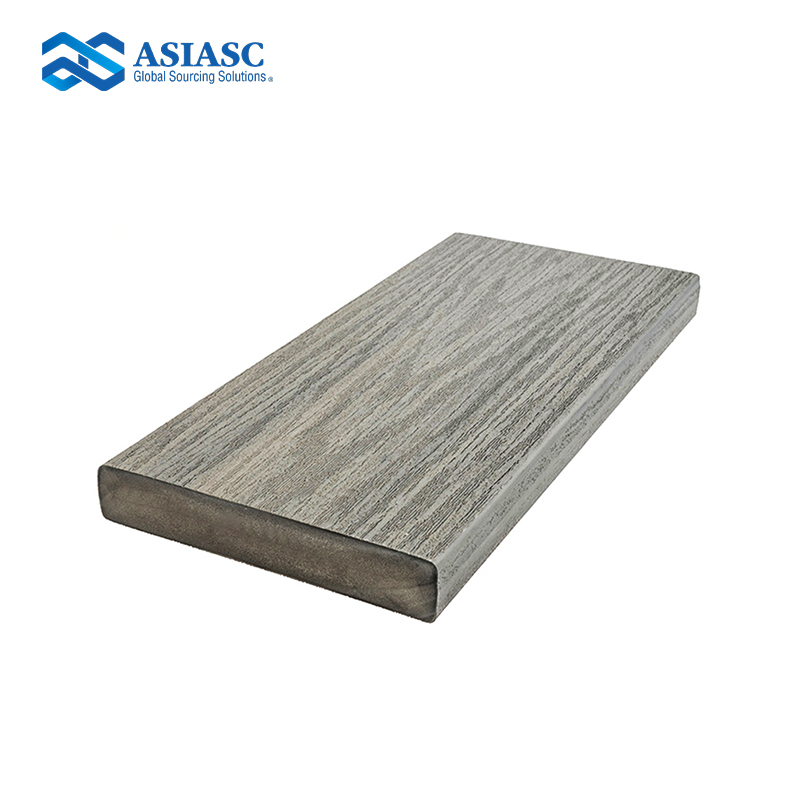
Also think about the setting. For a backyard pool, a calm two-tone pattern in gray and beige usually looks clean and hides dirt. For a resort-style look, wood-grain printed PVC tiles can imitate decking while staying waterproof, though the printed surface should still be tested for slip resistance.
Step-by-Step Installation Around the Pool
Installing PVC outdoor flooring for a poolside deck is simple, but the base you build on decides how well the floor performs for years. Follow these steps for a result that stays flat and safe.
Prepare the Surface
Sweep and wash the deck to remove dirt, algae and oil. Fill large cracks, and make sure the ground is firm and reasonably level. A slight slope away from the pool, around 1 to 2 percent, is ideal because it sends water toward drains rather than under the tiles. Let the surface dry completely before laying anything.
Plan Your Layout and Lay the Tiles
Dry-fit a few rows first so you can plan where cut pieces will go. Start from one corner or along a straight edge, and work across the area, clicking each tile into its neighbors. Leave a small expansion gap of roughly 5 to 10 mm around fixed edges, because PVC expands in heat and contracts in cold. Without that gap, tiles can buckle in summer.
Cut and Finish the Edges
Use a fine-toothed saw or a sharp utility knife with a straightedge to trim tiles around ladders, steps and curves. Smooth any cut edge with sandpaper so it does not catch bare feet, and finish the border with ramp edges where the deck meets the surrounding area.
Cleaning and Long-Term Care
PVC pool flooring is low maintenance, but a little routine care keeps it grippy and attractive. Rinse it with a hose every few days during heavy use to remove sunscreen, chlorine residue and sand. Once a month, scrub with a soft brush and a mild soapy cleaner, then rinse thoroughly. Avoid strong solvents, acetone and abrasive pads, since these can dull the surface and reduce its texture.
If algae or mildew shows up in shaded corners, use a cleaner that is safe for vinyl, and test it on a hidden spot first. In winter or periods of heavy snow, lift the tiles if the manufacturer recommends it, or clear snow gently with a plastic shovel instead of a metal one. With basic care, good-quality tiles often last many seasons before showing wear.
Common Mistakes to Avoid
Most complaints about poolside PVC flooring come from avoidable decisions made at the buying or installation stage. Watch out for these:
- Buying purely on price and ending up with thin, unstabilized tiles that fade or crack within a year or two
- Choosing very dark colors for a deck that gets full afternoon sun
- Skipping the expansion gap, which can cause warping on hot days
- Laying flooring over a surface that holds standing water
- Ignoring slip-resistance data and trusting marketing words alone
- Forgetting to order about 5 to 10 percent extra tiles for cuts and future repairs
Is PVC Outdoor Flooring Right for Your Pool?
For most homeowners, PVC outdoor flooring for poolside areas is a practical middle ground: cheaper and faster than stone or tile, more water-friendly than wood, and far more comfortable than bare concrete. It is a strong choice if you want better grip, easy cleaning and the freedom to replace single tiles. It is less ideal if you want a permanent, high-end stone look or if your deck has serious structural problems that need repair first.
Before ordering, measure the deck carefully, decide between tiles, rolls or mats based on drainage, choose a lighter color for hot climates, and ask for slip-resistance and UV-stability details. A few minutes of research now can save you from replacing the floor next year and give you a poolside that is safer, cooler and easier to enjoy.